


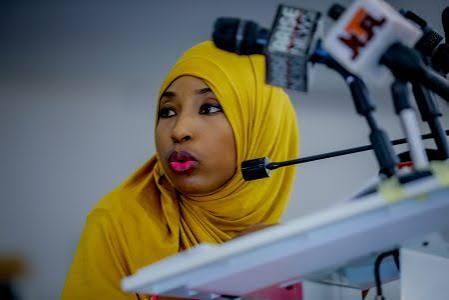
The Kalthum Foundation for Peace has called for greater representation of women from conflict-affected communities in security negotiations and peacebuilding efforts across the Sahel, warning that excluding their voices undermines efforts to protect girls and tackle child marriage.
The foundation’s Chief Executive Officer, Ummu Kalthum Muhammad Rabiu, made the call on Sunday while marking the 2026 International Day of the Girl Child, insisting that women must be recognised as active participants in resolving insecurity rather than treated merely as victims of conflict.
Rabiu said women in communities affected by insurgency, banditry, kidnapping and displacement possess firsthand knowledge of the factors driving violence, making their participation essential to sustainable peace.
In a statement issued in Maiduguri, Borno State, she lamented that security meetings and peace negotiations involving countries such as Nigeria, Niger, Burkina Faso and Chad often proceed without adequate representation of women from the communities most affected by conflict.
“For too long, security meetings in Abuja, Niamey, Ouagadougou and N’Djamena discuss the Sahel without one woman from the Sahel at the table,” she said.
According to her, peace agreements and security policies cannot adequately address the realities of women and girls when those directly affected are excluded from decision-making.
The foundation chief executive linked women’s participation in peacebuilding to the campaign against child marriage, arguing that poverty, insecurity and displacement have made adolescent girls particularly vulnerable to exploitation and early marriage.
She said attacks on schools, forced displacement and economic hardship had disrupted the education of thousands of girls across Northern Nigeria and the Sahel, leaving many families with limited options for their children’s future.
Rabiu noted that when schools become unsafe and households struggle to meet basic needs, girls are frequently withdrawn from classrooms and married off prematurely, perpetuating cycles of poverty and inequality.
Citing figures attributed to UNICEF, she said 44 per cent of girls in Northern Nigeria are married before the age of 18. She also highlighted the prevalence of child marriage in Niger and Burkina Faso as evidence of the wider regional challenge.
She maintained that child marriage should not be dismissed as a cultural issue, arguing that it has far-reaching consequences for human development, social stability and security.
“Girl child marriage is not just a girls’ issue. It is a security issue. It is an HDI issue. It is a peace issue,” she said.
Rabiu further argued that women-led organisations should receive greater institutional and financial support because of their ability to build trust within communities and intervene in situations where formal security structures may have limited access.
She cited the involvement of women in efforts to negotiate the return of abducted girls in Monguno and persuade young men to leave the Islamic State West Africa Province (ISWAP) in Bama as examples of grassroots contributions to peacebuilding.
According to her, such interventions demonstrate that women are not simply beneficiaries of humanitarian assistance but important actors in preventing violence, supporting reconciliation and strengthening community resilience.
The foundation consequently urged donors, United Nations agencies and state governments to provide direct funding to local women’s organisations, enabling them to expand their work in conflict prevention, education advocacy and the protection of vulnerable girls.
It also called for stronger implementation of the Safe Schools Declaration, stressing that protecting educational institutions and keeping girls in school should be treated as priorities in Nigeria’s security strategy.
Rabiu urged traditional and religious leaders, including Tsangaya and Islamiyya teachers, to work with communities to end child marriage and challenge the use of poverty or religious beliefs to justify the practice.
She stressed that girls should be allowed to complete their education and make informed decisions about their futures, rather than being forced into marriage as a means of easing their families’ economic burdens.
As part of its activities to commemorate the International Day of the Girl Child, the Kalthum Foundation for Peace said it would engage 200 adolescent girls who had escaped child marriage and returned to school in three communities in Maiduguri.
The programme, according to the foundation, would provide the girls with an opportunity to share their experiences and contribute to conversations about their rights, education and protection.
Rabiu said their experiences should inform policies and interventions designed to address the challenges confronting girls in conflict-affected communities.
She called on governments and development partners to move beyond symbolic commitments by ensuring that women from local communities participate meaningfully in security planning, peace negotiations and development programmes.
The foundation maintained that protecting girls, expanding access to education and strengthening women’s participation in decision-making were interconnected priorities that required coordinated action across Northern Nigeria and the Sahel.
Rabiu said the region’s pursuit of lasting peace would remain incomplete unless women and girls were given the opportunity to influence the decisions that shape their lives and communities.
