

Nigeria–UK Counterterrorism Partnership Deepens as Security Training Shifts Focus to Intelligence and Coordinated Response

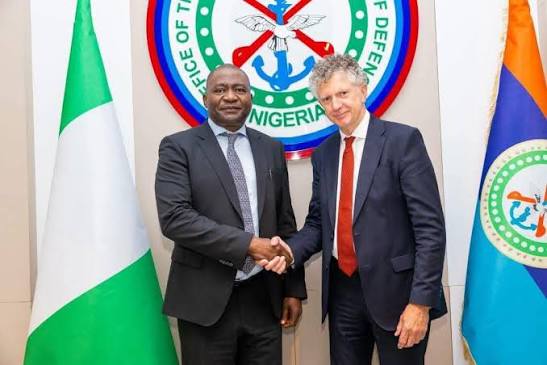
Nigeria and the United Kingdom are tightening their security collaboration with a renewed emphasis on intelligence sharing, crisis coordination and advanced incident management training, in response to what both sides describe as increasingly complex and borderless security threats.
The commitment was restated on Monday at the opening of combined training programmes at the National Counter Terrorism Centre (NCTC) in Abuja, where senior officials from both countries gathered for courses on incident command leadership and advanced intelligence analysis.
The programmes—covering Gold, Silver and Bronze Incident Commanders’ Courses alongside an Advanced Intelligence Analysis Course—are aimed at improving how security agencies plan, coordinate and respond to emergencies and terror-related incidents across Nigeria.
For Nigeria, officials say the training is part of a broader effort to strengthen institutional readiness and improve coordination among multiple security agencies often deployed during crises.
Speaking at the event, the National Coordinator of the NCTC, Maj.-Gen. Adamu Laka, said the initiative is designed to build stronger leadership capacity across operational, tactical and strategic levels of emergency response.
He explained that participants would be trained to handle complex security situations through improved decision-making, crisis management skills and inter-agency collaboration, all of which are critical to strengthening the country’s national incident management framework.
The intelligence-focused component of the programme is expected to introduce participants to modern techniques for collecting, analysing and sharing information used in counterterrorism operations. According to Laka, this would significantly improve Nigeria’s ability to detect, disrupt and respond to security threats while also enhancing national stability and resilience.
He also commended the British High Commission for its continued technical support, noting that the partnership has contributed to building Nigeria’s capacity in counterterrorism operations through training expertise and institutional collaboration.
From the UK side, the Regional Coordinator of the Joint Counter Terrorism Training and Advisory Team at the British High Commission, Ian Tyler—represented by Anthony Francis—underscored the strategic importance of sustained cooperation between both countries.
He said the training programmes were developed after consultations with Nigerian authorities to ensure relevance to frontline operational realities, particularly in managing complex and fast-evolving emergencies.
Tyler observed that insecurity across the Sahel region has grown more sophisticated, making coordinated responses, strong command structures and international cooperation essential for effective security management.
He added that terrorism, violent extremism and organised crime now operate across borders, requiring countries to adopt shared operational standards and deepen institutional partnerships.
Reaffirming the UK’s commitment, he said Britain would continue to support Nigeria through practical training, intelligence cooperation and capacity-building initiatives designed to improve operational effectiveness and save lives.
Participants were urged to maximise the opportunity by engaging actively in simulations, lectures and scenario-based exercises, which are expected to strengthen their ability to respond to real-world security challenges.
The 10-day programme will conclude with certification for participants, marking another step in efforts to reinforce Nigeria’s counterterrorism architecture through improved training, intelligence integration and coordinated response systems.
