

Army Reshuffle: Shaibu Bets on New Commanders to Reset Nigeria’s Security Frontlines

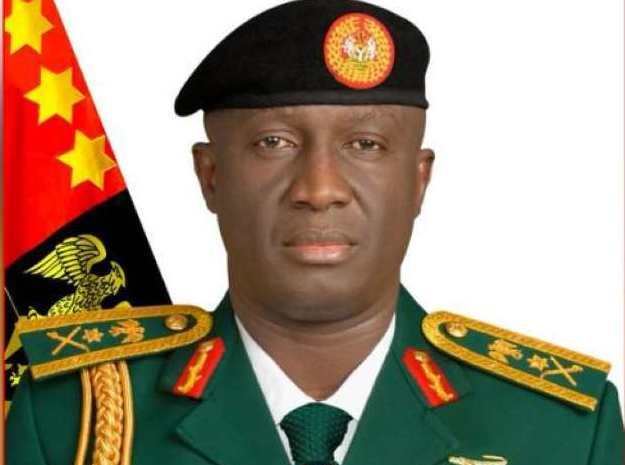
The Nigerian Army is entering another phase of command adjustment as the Chief of Army Staff (COAS), Lt.-Gen. Waidi Shaibu, redeploys senior officers to critical operational and strategic positions in what appears to be an effort to sharpen the force’s response to Nigeria’s increasingly complex security challenges.
The latest postings are more than routine military movements. They come at a time when the country’s security environment is being shaped by terrorism and insurgency, banditry, communal violence and other emerging threats requiring greater operational flexibility, intelligence-driven deployments and stronger coordination among security agencies.
Announcing the changes on Wednesday, the Acting Director, Army Public Relations, Col. Appolonia Anele, said the postings were approved by the COAS to strengthen operational effectiveness and enhance the Army’s response to evolving threats.
One of the most significant changes is at the Theatre Command Joint Task Force North-East, Operation HADIN KAI, where Maj.-Gen. Ibikunle Ajose takes over as Theatre Commander, moving from the Army Headquarters Department of Army Operations.
His deployment places him at the centre of one of the Army’s most enduring operational theatres. The North-East remains a critical test of Nigeria’s counter-insurgency capabilities, making the experience and leadership style of the new theatre commander particularly important to the Army’s broader security strategy.
Ajose takes over from Maj.-Gen. Abdulsalam Abubakar, who has been moved to the Nigerian Army Heritage and Future Centre as Dean, Faculty of Operational Research.
The new assignment for Abubakar is equally significant. Rather than removing his operational experience from the Army’s strategic calculations, the posting places it within an institutional setting focused on operational research and the development of future military capabilities.
That shift reflects an increasingly important reality for modern warfare: battlefield experience must translate into doctrine, analysis and institutional learning if military organisations are to remain ahead of evolving threats.
Beyond the Battlefield
The reshuffle extends beyond frontline commands.
Maj.-Gen. Aminu Umar moves from the Army Headquarters Department of Civil-Military Affairs to the Army War College Nigeria as Commandant, placing him in charge of an institution central to the professional development and strategic education of senior military officers.
Maj.-Gen. GS Muhammed, formerly with the Office of the National Security Adviser, moves to the Nigerian Army Finance Corporation as Director-General, while Maj.-Gen. Julius Osifo moves from the corporation to the Military Pension Board as Chairman.
Maj.-Gen. IE Ekpenyong is also moving to Defence Headquarters, where he will serve as Director, Engineering Services, in the Department of Defence Logistics.
Taken together, the appointments indicate that the Army’s current leadership changes are not confined to operational theatres. They encompass training, research, civil-military relations, finance, pensions and logistics — areas that ultimately determine how effectively troops can be prepared, equipped, supported and sustained.
A New Layer of Brigade-Level Command
The Army has also altered leadership at several brigade-level formations.
Brig.-Gen. MS Adamu moves from the Nigerian Army Women Command to assume command of the newly established 8 Brigade, while Brig.-Gen. MS Sule moves from Special Task Force Operation ENDURING PEACE to 27 Task Force Brigade.
Brig.-Gen. I. Sule moves from the Directorate of Recruitment Management to 6 Division Garrison as Commander, while Brig.-Gen. E Azenda moves from the Land Forces Simulation Centre to 2 Division Garrison.
The appointment of a commander to the newly established 8 Brigade is particularly noteworthy because new formations often represent attempts to improve the Army’s geographical reach, command responsiveness and ability to deploy forces against emerging threats.
The success of such formations, however, will depend not merely on the calibre of their commanders but also on the availability of troops, intelligence, logistics, equipment and sustained institutional support.
The Test Ahead
For the newly appointed commanders, the real challenge begins after the ceremonies and formal assumption of office.
Nigeria’s security threats are increasingly fluid. Armed groups can shift operational patterns, exploit difficult terrain and adapt to pressure from security forces. This places a premium on commanders who can combine conventional military capabilities with intelligence-led operations, technology, community engagement and inter-agency cooperation.
It is against this backdrop that Shaibu charged the newly appointed officers to justify the confidence placed in them through exemplary leadership, operational innovation and professionalism.
He also directed them to remain committed to defending Nigeria’s sovereignty, protecting its territorial integrity and supporting civil authorities in maintaining peace and security.
The COAS further reaffirmed his commitment to a dynamic leadership and force-employment framework designed to improve operational outcomes and strengthen joint and inter-agency coordination.
Leadership Must Translate Into Results
Ultimately, the significance of the latest Army reshuffle will not be measured by the number or seniority of officers moved from one appointment to another. It will be judged by what changes on the ground.
For communities affected by insecurity, the expectation is straightforward: better protection, faster response to threats, more effective operations and a gradual restoration of confidence in the state’s capacity to secure lives and property.
For the Army, the challenge is equally clear. Leadership changes can provide fresh perspectives and new operational energy, but they must be matched with adequate resources, reliable intelligence, effective coordination and institutional accountability.
Shaibu’s reshuffle therefore represents both an opportunity and a test. By placing new commanders in strategic positions across the operational, training, research and support structures of the Army, the service is seeking to align its leadership architecture with a security environment that is changing faster than conventional command arrangements can sometimes accommodate.
Whether the new appointments will deliver the desired operational gains will ultimately depend on how effectively the officers convert their experience and authority into measurable results on Nigeria’s security frontlines.
