


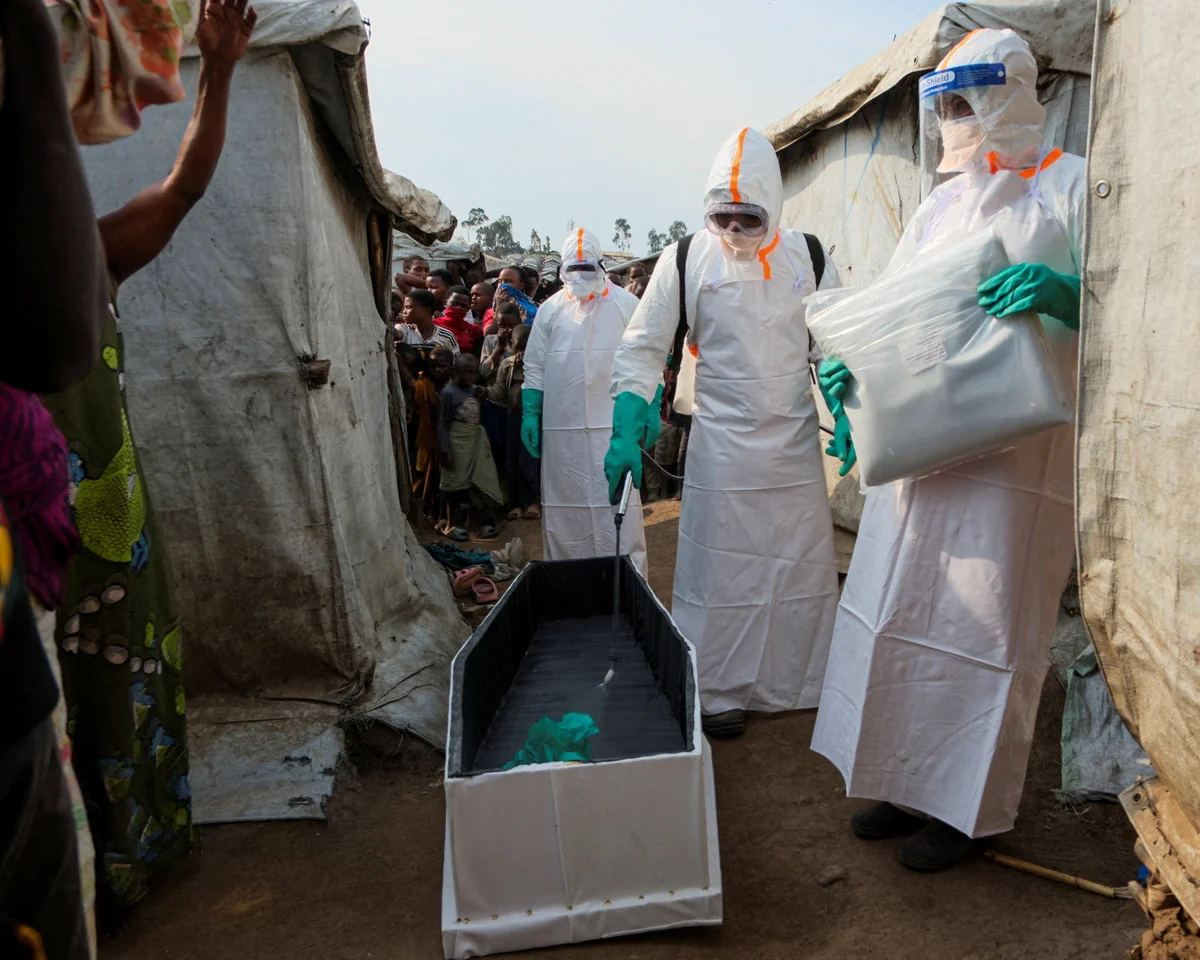
The world is facing a renewed Ebola emergency in the Democratic Republic of the Congo (DRC), with the United Nations warning that the virus is spreading faster than efforts to contain it as the death toll approaches the grim milestone of 3,000.
The warning has renewed concerns over the capacity of national authorities and international humanitarian agencies to keep pace with an outbreak that is rapidly expanding across affected communities, particularly in provinces already grappling with insecurity, weak infrastructure and limited access to healthcare.
UN Emergency Relief Coordinator, Tom Fletcher, said the scale of the response had increased significantly, but not quickly enough to match the speed at which the virus was moving.
“The response is growing and has been scaled up, but the virus is moving faster,” Fletcher said.
“And unless we scale up urgently, more lives will be lost and the threat will grow.”
According to figures reported by DRC authorities, more than 6,100 confirmed cases and 2,950 deaths had been recorded by Monday, with Ituri Province accounting for more than 5,000 infections.
The figures paint a disturbing picture of an epidemic that is placing enormous pressure on an already stretched humanitarian system.
A Race Against Transmission
Ebola is particularly dangerous because of the speed with which transmission can occur once the virus reaches densely populated or poorly served communities.
The disease is transmitted through direct contact with the blood or bodily fluids of an infected person, as well as contaminated materials. This makes rapid detection, isolation of suspected cases, contact tracing and infection prevention essential to stopping chains of transmission.
But in parts of the DRC, those measures are being complicated by insecurity, inadequate infrastructure and difficulties in reaching vulnerable communities.
For Fletcher, the challenge is no longer simply whether the international community has the technical ability to fight Ebola. The greater question is whether political leaders and donors will provide the access, financing and sustained commitment required to deploy those tools at the necessary scale.
“We have the experience, the tools and extraordinary people risking their lives to stop this epidemic. What we need now is political will, access and resources,” he said.
His appeal reflects a familiar dilemma in global health emergencies: the difference between having the tools to stop a disease and having the resources and access needed to use them effectively.
The Cost of Delay
The UN says a funding deficit of approximately $1.1 billion is currently limiting the ability of humanitarian agencies to expand surveillance, treatment, community mobilisation and preparedness measures across borders.
The shortfall is significant at a time when health authorities need to intensify operations rather than scale them back.
Fletcher said the UN Central Emergency Response Fund had already allocated more than $57 million to support Ebola response and preparedness activities in the DRC and neighbouring countries.
However, the UN relief chief stressed that additional resources were urgently required if the international community was to prevent the epidemic from gaining further ground.
The concern extends beyond the immediate areas where infections have been identified. With populations moving between communities and across national borders, a failure to contain transmission in the DRC could increase the risk of new cases appearing elsewhere.
Borders Under Watch
The International Organization for Migration (IOM), a UN agency, has been working with authorities to address that cross-border threat.
UN spokesperson Stéphane Dujarric said the organisation had conducted nearly 23 million health screenings in the DRC and neighbouring countries.
The screenings are designed to monitor population movements, identify people who may have been exposed to the virus and reduce the possibility of infected individuals carrying Ebola across borders.
Such surveillance is particularly important in a region where movement between communities and countries is often driven by trade, displacement, insecurity and the search for essential services.
The sheer scale of the screenings illustrates the magnitude of the challenge facing health officials.
Lessons From West Africa
The latest crisis also evokes memories of the devastating Ebola epidemic that swept through West Africa between 2014 and 2016, killing thousands and overwhelming health systems in Guinea, Liberia and Sierra Leone.
The UN says the current outbreak is spreading substantially faster than that earlier epidemic, raising concerns that valuable lessons from previous outbreaks could be tested under intense pressure.
Yet there are also reasons for cautious optimism.
The international community has accumulated considerable experience in responding to Ebola since the West African crisis. Improved surveillance, rapid diagnostic capacity, contact tracing, infection prevention and clinical management have strengthened the global response.
The recent declaration by the World Health Organisation that Uganda’s latest Ebola outbreak was over demonstrated what can be achieved when an outbreak is detected quickly and met with an aggressive public-health response.
Rapid detection, contact tracing, isolation, clinical care, infection prevention and strengthened surveillance were central to Uganda’s success.
That experience offers an important lesson for the DRC: Ebola can be contained, but the window for decisive action can be narrow.
Political Will Is the Missing Weapon
For the UN, the current emergency is therefore not simply a medical crisis. It is also a test of international political commitment.
Humanitarian agencies need unrestricted access to affected populations, particularly in communities where insecurity makes it difficult for health workers to operate safely.
They also need predictable financing to maintain treatment centres, strengthen laboratories, conduct surveillance, mobilise communities and prepare neighbouring countries for potential cases.
Without those resources, even the most sophisticated medical tools can become ineffective.
Fletcher’s message is consequently as much directed at political leaders and donors as it is at health officials.
“We have beaten Ebola before, and we can do it again,” he said.
But beating Ebola again will depend on how quickly that political will is translated into action.
With deaths already approaching 3,000 and thousands more people infected, the contest is increasingly becoming a race between a rapidly moving virus and an international response struggling to catch up.
For the communities at the centre of the crisis, the outcome of that race could determine not only how many lives are lost, but whether the outbreak remains a regional emergency or becomes a wider global health threat.
