

MSF Highlights Malaria–Malnutrition Link Among Children in Nigeria

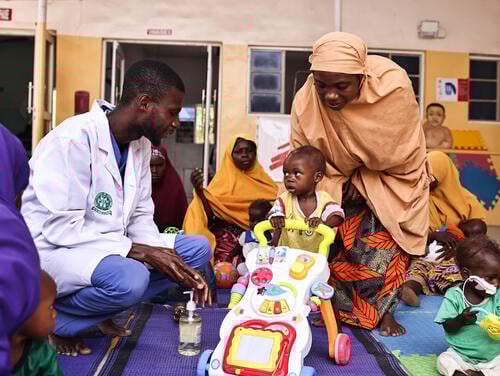
Médecins Sans Frontières (MSF), also known as Doctors Without Borders, has identified malaria as a major illness affecting malnourished children in Nigeria, underscoring a dangerous cycle that threatens child survival.
Dr Alibaba Nuraddeen, Acting Medical Team Leader with MSF in Katsina, made this known while speaking to journalists to mark World Malaria Day 2026.
He said malaria ranked among the top three diseases treated in the organisation’s Inpatient Therapeutic Feeding Centres (ITFCs) in 2025, which handle cases of severe child malnutrition.
According to him, the centres recorded about 26,000 paediatric admissions last year, many involving co-infections.
Nuraddeen explained that malaria commonly occurred alongside acute watery diarrhoea and sepsis, posing a significant risk to children in northern Nigeria.
“Malaria and malnutrition are deeply interconnected. Malaria reduces appetite and food intake, while malnutrition weakens immunity, making children more susceptible to severe infection,” he said.
He warned that failure to promptly diagnose malaria in malnourished children could prolong illness and delay recovery.
“A child with untreated or recurrent malaria over weeks may eventually become malnourished,” he added.
To address this, Nuraddeen said MSF had made malaria screening mandatory for every child admitted into its feeding programmes.
Citing data from the World Health Organization, he noted that Nigeria accounts for 24.3 per cent of global malaria cases and 30.3 per cent of related deaths, representing more than half of the burden in West Africa.
He also pointed to ongoing government efforts to tackle the disease, including the expansion of malaria vaccination programmes.
According to the National Primary Health Care Development Agency, the rollout—initially piloted in Bayelsa and Kebbi states—has now been extended to Bauchi and Ondo states as part of broader strategies to reduce malaria prevalence and child mortality.
