

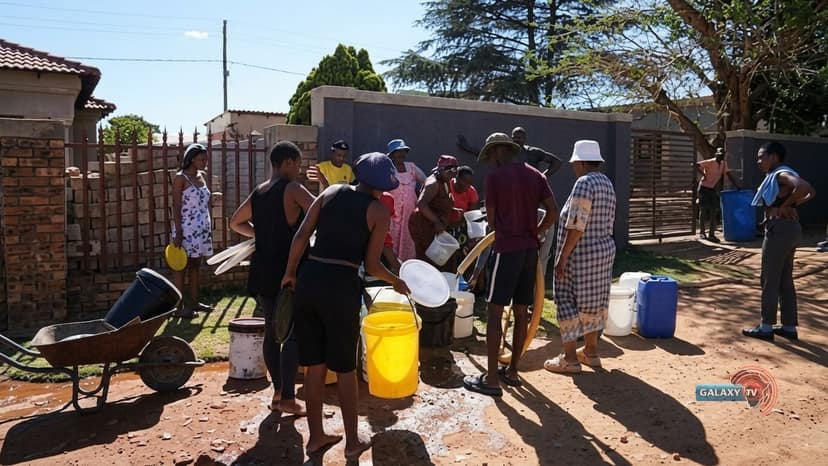
Major cities in South Africa are tightening water-use restrictions as the strengthening El Niño weather phenomenon threatens to bring hotter temperatures and reduced rainfall, raising fears of drought and worsening pressure on the country’s already overstretched water supplies.
Authorities have imposed Level 2 water restrictions across Gauteng Province, covering major urban centres such as Johannesburg and the Tshwane Metropolitan Municipality, where Pretoria, the administrative capital, is located.
The Johannesburg municipal government has estimated that daily water consumption must be cut by 200 million litres to stabilise supply and reduce pressure on reservoirs.
In Cape Town, authorities are preparing to introduce Level 1 water restrictions from December 1, requiring residents to reduce their water consumption by 10 per cent.
South Africa operates a tiered water-restriction system, with each level prescribing measures to curb consumption. Level 1 restrictions mainly target non-essential outdoor water use, while Level 2 rules prohibit the use of municipal tap water for irrigating gardens and public green spaces.
Households that exceed their allocated water-use limits also face higher charges as authorities seek to discourage excessive consumption.
The measures come amid warnings from the country’s weather service that the developing El Niño event could become one of the strongest on record, potentially bringing below-average rainfall and above-average temperatures during the coming summer months.
Ferrial Adam, executive director of WaterCAN, a Johannesburg-based community action network focused on water quality and related issues, said the combination of adverse climate conditions and ageing water infrastructure was worsening the country’s water challenges.
Adam explained that El Niño alters weather patterns through changes in ocean temperatures, often resulting in hotter and drier conditions in some parts of the world.
She said the impact of the phenomenon was compounding existing infrastructure problems, making it more difficult for communities and municipal authorities to manage water supplies.
El Niño is a naturally occurring climate phenomenon characterised by the periodic warming of sea-surface temperatures in the central and eastern equatorial Pacific Ocean. It can disrupt weather patterns globally, increasing the likelihood of drought in some regions while contributing to heavier rainfall in others.
Beyond the immediate threat to household and industrial water supplies, the anticipated dry spell has raised concerns about its implications for agriculture and food production.
Prolonged drought and extreme heat could undermine crop yields, disrupt farming activities and increase production costs, potentially driving up food prices from March next year.
The development could further worsen food security challenges across southern Africa, particularly if reduced rainfall persists through the planting and growing seasons.
With major urban centres already introducing conservation measures, the coming months are expected to test South Africa’s ability to manage its water resources amid the combined pressures of climate variability, ageing infrastructure and rising demand.

