


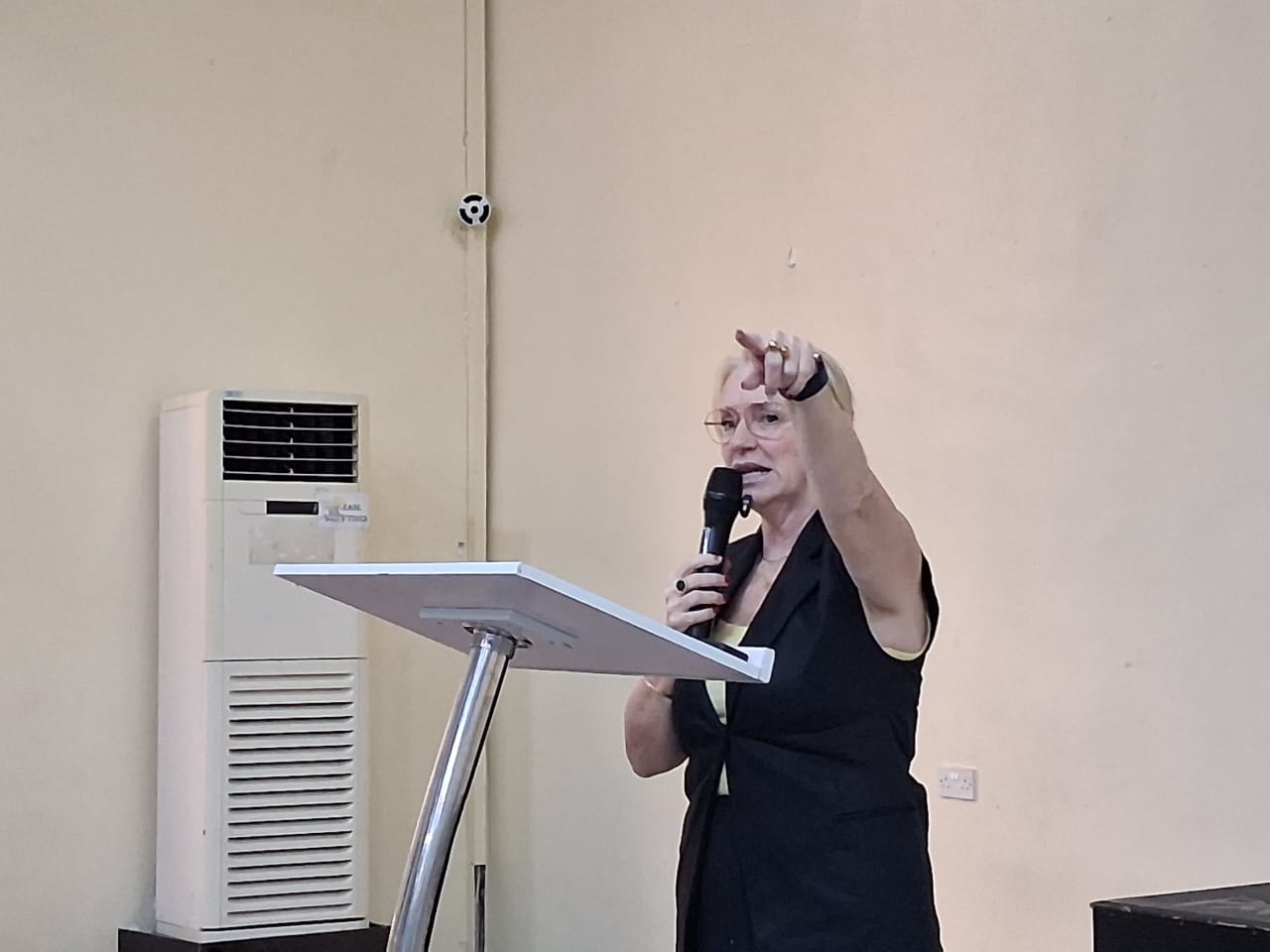
The United Nations Children’s Fund (UNICEF) has described birth registration as the first and most fundamental right of every child, stressing that it provides the legal identity needed to access education, healthcare, social protection and other lifelong opportunities.
UNICEF Chief of Lagos Field Office, Celine Lafoucriere, stated this on Tuesday in Lagos at a two-day media dialogue on birth registration organised in collaboration with the National Population Commission (NPC), Lagos.
The News Agency of Nigeria (NAN) reports that the workshop, themed “Giving Every Child a Legal Identity by Driving Birth Registration in Nigeria,” brought together journalists from states across the Southwest and Edo State to strengthen media coverage and public awareness of birth registration.
Lafoucriere said civil registration provides children with the legal identity required for recognition by the state, describing it as the foundation upon which other rights are built.
“Civil registration is the child’s identity, and it is the foundational right of every child.
“Without that right, nothing else can happen. A child cannot go to school without an identity,” she said.
According to her, the importance of birth registration extends beyond access to education, as a registered child is better positioned to enjoy essential services and exercise rights throughout life.
“A registered child can access health services and, as an adult, will be able to vote, own property and inherit wealth.
“A child cannot access the health system without an identity. And it goes on like this throughout life,” she added.
The UNICEF chief noted that despite the importance of birth registration, many parents still delay the process because existing systems sometimes allow children without birth certificates to access certain public services.
She, however, stressed that universal birth registration was critical to effective national planning, budgeting and the delivery of social protection programmes.
Lafoucriere said UNICEF was working with the Federal Government to establish a credible social register that would facilitate the delivery of benefits to vulnerable families.
“We are working with the Government of Nigeria to build a credible social register that will be used to deliver benefits to vulnerable families.
“If a child doesn’t have an identity, he or she does not exist on the social register.
“Unregistered children are missing from government budgets, which affects funding for health, education and welfare programmes.
“If there are 3.5 million children who are not registered, it means that 3.5 million times whatever the budget is normally for one child is not in the government’s budget,” she said.
She therefore urged journalists to intensify public enlightenment on birth registration, particularly by highlighting the experiences of children and mothers and providing information on where registration services are available.
According to her, Primary Healthcare Centres (PHCs) and other community registration points equipped with the necessary devices provide important avenues for parents to register their children.
“You can tell a specific child’s story, a specific mother’s story, and tell it to the world, tell it to the parents who are isolated, who are the most vulnerable, who need to understand why it’s important and where they can have their child registered,” she said.
Earlier, the Lagos State Director of the NPC, Mr Sherifdeen Kekere-Ekun, said the media dialogue was aimed at increasing public understanding of birth registration and correcting misconceptions surrounding the process.
Kekere-Ekun urged journalists to deploy different platforms, including news reports, radio jingles, television programmes, feature stories and social media campaigns, to educate Nigerians on the importance of registering births.
“Through news reports, radio jingles, television stations, features and social media campaigns, journalists can explain that birth registration is not just paperwork but a child’s first fundamental right and legal identity.
“By telling real stories of children and mothers, the media helps parents understand the long-term benefits, from access to school and healthcare to voting, inheritance and social protection, as well as where they can register, such as PHCs and community centres equipped with tablets.
“Beyond awareness, the media also acts as a watchdog and mobiliser that holds government and communities accountable,” he said.
