

For years, Nigerian skit maker and content creator Carter Efe painstakingly built a digital empire around short videos, comedy, music and live broadcasts. Millions followed, watched, shared and interacted with his content, turning his TikTok account into a powerful distribution channel.
Then, almost overnight, that digital empire was pulled from the platform.
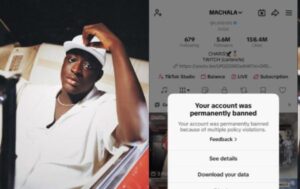
TikTok has reportedly permanently banned Carter Efe’s official account, which had amassed about 5.6 million followers, following what the platform described as repeated violations of its community guidelines.
The ban has sent a familiar but uncomfortable message to Nigeria’s fast-growing creator economy: an audience can be enormous, but it is not necessarily owned by the creator.
The account represented years of content production and audience building. Its disappearance means the loss of a major channel through which Efe reached millions of people without having to depend on traditional broadcasters, publishers or entertainment companies.
For a creator whose career is built largely around visibility, that is no small setback.
The price of platform dependence
The rise of TikTok, Instagram, YouTube, Twitch and other digital platforms has dramatically changed Nigeria’s entertainment industry. Young creators can now bypass traditional gatekeepers and take their comedy, music, commentary and personalities directly to millions of viewers.
But the same platforms that provide unprecedented opportunities also retain considerable control over the rules governing those opportunities.
Community guidelines, copyright policies and automated moderation systems can determine whether a creator’s account remains active, is restricted temporarily or disappears altogether.
In Carter Efe’s case, TikTok reportedly attributed the permanent ban to repeated policy violations. However, the precise violations responsible for the latest enforcement have not been publicly detailed in the information surrounding the development.
That uncertainty has added to the debate among his followers, some of whom questioned why an account with such a large audience could be permanently removed.
Shock, criticism and sympathy
News of the ban generated a wave of reactions across social media.
Some fans expressed sympathy for Efe and concern about the years of work invested in building his audience.
One X user, @Olamide0fficial, described losing an account built over several years as particularly painful, while @abazwhyllzz urged supporters to rally around the creator following the sudden loss of his TikTok reach.
Others were far less sympathetic.
Some commentators suggested that the ban could have resulted from Efe’s conduct during live broadcasts, while others blamed repeated reports by individuals opposed to him. Still others argued that the creator should have paid greater attention to previous warnings.
The contrasting reactions illustrate an important reality of social media: when a high-profile creator loses an account, the public often sees the final enforcement action but not necessarily the entire history of warnings, reports, removals or policy violations that may have preceded it.
More than an account
For creators such as Carter Efe, a social media account is more than a username.
It is a business asset, an audience database, a promotional platform and, increasingly, a career infrastructure.
The 5.6 million followers attached to the TikTok account represented potential viewers for comedy content, music releases, livestreams, endorsements and other commercial opportunities.
Losing access therefore has implications beyond social media vanity metrics.
It can affect advertising opportunities, brand partnerships, traffic to other platforms and the ability to immediately reach an established audience.
Yet the episode also exposes one of the fundamental weaknesses of the creator economy: followers on a platform are not the same thing as an independently controlled audience.
A creator may spend years building millions of followers but can lose access to that community if the platform terminates the account.
The importance of diversification
Carter Efe’s continued presence on other platforms could ultimately soften the impact of the TikTok ban.
The creator has established himself as a live streamer on Twitch and remains active across alternative social media channels. His career also extends beyond skit-making.
He gained significant music attention in 2022 following the release of his hit song featuring Berri Tiga, giving him another avenue through which to maintain public relevance.
That diversification may now prove particularly valuable.
For Nigeria’s growing community of digital creators, the lesson is increasingly clear: never build an entire career around one platform.
Creators who maintain audiences across YouTube, Instagram, TikTok, Twitch, X and other channels have a better chance of surviving the sudden loss of any single account.
More importantly, creators need channels they can control more directly, including websites, mailing lists, communities and other forms of direct audience engagement.
A warning for Nigeria’s creator economy
The Carter Efe episode is unlikely to be the last controversy over platform enforcement involving a Nigerian creator.
As the country’s creator economy expands, so too will tensions surrounding moderation, copyright, online conduct and the enforcement of global platform rules within Nigeria’s distinct cultural environment.
The challenge is to strike a balance.
Platforms have a legitimate responsibility to enforce their rules and protect users. Creators, on the other hand, need to understand that popularity does not exempt them from those rules.
At the same time, the episode raises questions about transparency and due process in digital platforms, particularly when permanent bans can wipe out years of audience growth.
For Carter Efe, the immediate task is rebuilding his connection with millions of followers who suddenly lost their familiar digital meeting point.
For other creators, however, the bigger lesson may be more enduring.
Five million followers can take years to build. Losing them can take only one platform decision.
And in an industry where digital visibility has become a form of economic power, that vulnerability is one that Nigeria’s creator economy can no longer afford to ignore.
